
What volume and proportion of finance to African countries for climate action came as loans in 2022? Is it targeting need? We look at data from the DAC, IDA and China.
DownloadsThis factsheet analyses debt resulting from public concessional loans for climate action received by African countries. It explores loans for adaptation, mitigation or both.
It highlights that a significant volume and proportion of public concessional finance directed at addressing climate challenges in Africa is being provided in the form of loans. Although these will be repaid at lower-than-market rates and/or have longer maturity and grace periods, they will ultimately need to be repaid.
Finance supporting sub-Saharan African countries’ response to climate change, particularly the least developed African countries[1] and those at risk of climate disaster, should be primarily grant-based, covering as many eligible countries as possible. Non-grant-based financing risks exacerbating national debt burdens that are already significant for many African countries. It also raises the question of who is ultimately paying for climate action in countries that contributed the least to the climate crisis.
Close to two-thirds (64%) of African countries are classified as among the world’s most vulnerable to the negative impacts of climate change.[2] The continent also hosts close to 60% of low-income countries that are either already in external debt distress or at high risk of external debt distress.[3] Africa’s debt burden has been growing since the 2008 global financial crisis.
Since the early 2010s, the risk of a fiscal crisis in Africa, particularly in sub-Saharan Africa, has more than doubled. Additionally, the interest payments to revenue ratio in this region is approximately four times higher than that of advanced economies.[4] Africa’s public and publicly guaranteed (PPG) external debt tripled to US$657 billion between 2008 and 2022, representing 60% of its external debt. By 2022, its median total external debt had doubled to nearly 50% of GDP (with PPG external debt accounting for most of this debt).[5] This is especially alarming because African debt held by private creditors has been growing due to the high cost of borrowing, and African debt is especially sensitive to growth and fiscal shocks.[6]
Vulnerability to climate crises and limited fiscal space create the perfect storm for Africa. Of the 10 countries most at risk from climate disaster, seven are in the region.[7] Many African countries have low adaptive capacity, which makes them vulnerable to food insecurity and declining income.[8] With limited fiscal space and the high costs associated with addressing climate change, many African countries rely on external financing and require assistance from global partners.[9] Although concessional financing, particularly in the form of grants, is the most suitable option, many African nations end up borrowing to fund climate action.
A loan, whether on favourable terms (concessional) or not (market rate) is ultimately a debt-generating mechanism. African countries are finding themselves in climate ODA loan debt despite not carrying any historical responsibility for the climate crisis.
Some developing countries recognise loans for climate action as part of their own nationally determined contribution[10] while the African Group of Negotiators (AGN)[11] argues that financing that requires return payments should not be counted as climate finance: [12]
“Loans as financial instruments together with green bonds, are not to be considered as climate finance, as both are to be paid back with interest rate that is higher than interest rate applied in developed countries, thus they are pure revenue generating instruments’’
Gabon, on behalf of the AGN,
Furthermore, the use of non-concessional (market-based) loans as climate finance is contrary to the spirit of the United Nations Framework Convention on Climate Change (UNFCCC), where the responsibility of transferring resources rests with developed countries. For this reason, we have not assessed non-concessional financing to climate action.
In this factsheet, we explore key data points that show how ODA is being used in concessional loans for climate action – which countries receive the most, and whether loans are matching Africa’s priorities? We also look at trends in how the World Bank’s International Development Association (IDA) and China – among the biggest providers – are deploying loans. We conclude with a section of key recommendations for how financing in response to the climate crisis should be provided to equitably meet recipients’ needs, and argue that loans should be considered as fiscal effort on the part of the recipient towards its nationally determined contribution, rather than fiscal effort on the part of the donor. This should inform how the New Collective Quantified Goal (NQCG)[13] on climate finance is measured.



We use the most recently available dataset (data for calendar year 2022, published in late December 2023). This factsheet includes data on concessional loans (low or no interest rate) in the form of official development assistance (ODA) reported to the Organisation for Economic Co-operation and Development’s Development Assistance Committee (OECD DAC) and concessional loans from China to African countries (all African Union members) – these are identified using the same criteria as the OECD’s ODA definition. Data for the latter was sourced from AidData’s Global Chinese Development Finance Dataset, Version 3.0.
Climate adaptation and mitigation statuses are based on donor-provided Rio markers,[14] where available. For donors that have not screened their ODA for climate adaptation and mitigation, a combination of keyword search and a novel machine-learning algorithm was used to generate classifications. You can read more about this methodology in the annex.
The latest data, from 2022, shows that:
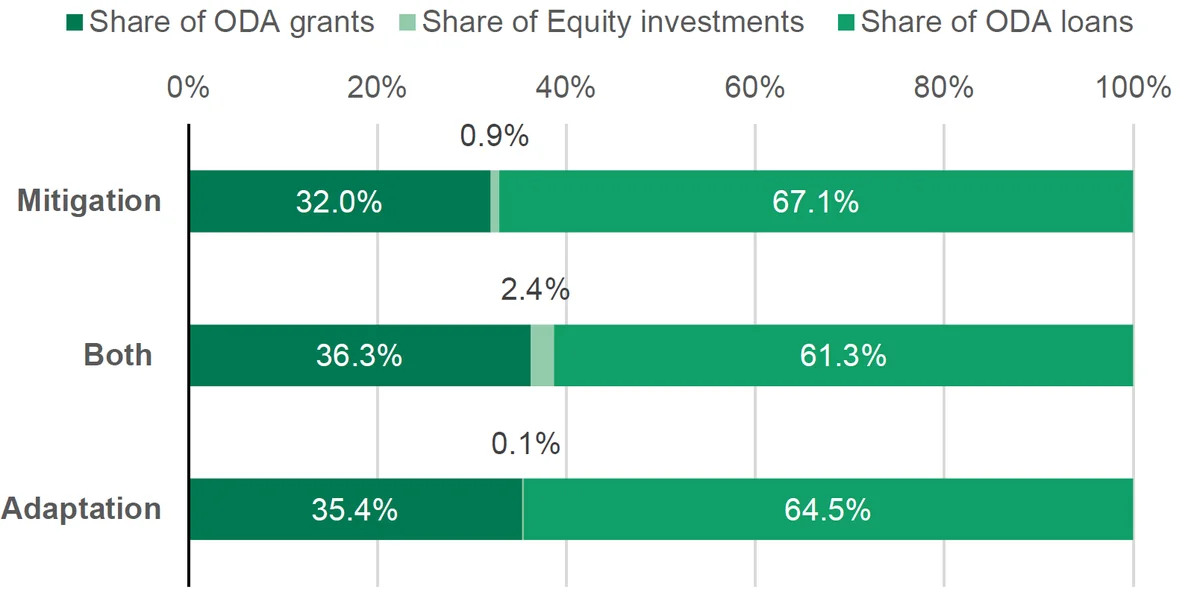
This focus on loans occurs even when we break climate action down into adaptation, mitigation or both. Mitigation activities are attractive to the private sector, and so loans are a common form of financing; adaptation, however, is carried out primarily through public investment and domestic budget, and so should attract grants.
Figure 1: Share of ODA for climate action in Africa by type of climate action and financing instrument, 2022
to come
Source: Development Initiatives based on OECD DAC data.
Notes: ‘Equity investments’ refers to development investments by governments in the equity of projects or companies in recipient countries.
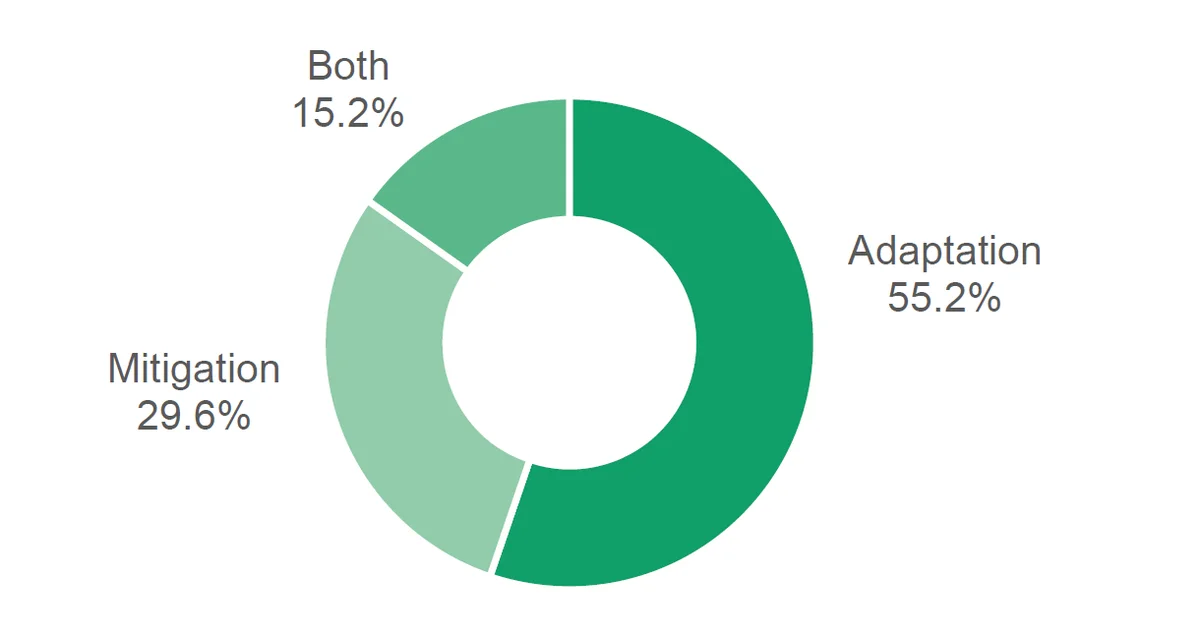
The African Union’s Climate Change and Resilient Development Strategy and Action Plan (2022–2032) reaffirms that adaptation and resilience-building remain Africa’s top priority. [15]
Figure 2: Share of ODA for climate action in Africa by type of climate action, 2022
to come
Source: Development Initiatives based on OECD DAC data.
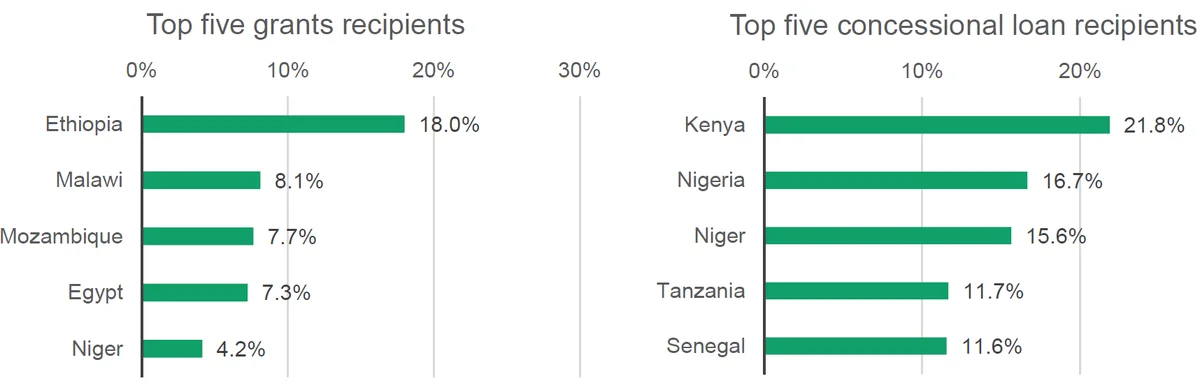
Figure 3: The five largest recipients of grants and concessional loans for adaptation in Africa, 2022
to come
Source: Development Initiatives based on OECD DAC data.
Notes: Percentages exclude funding to multi-country ‘Africa, regional’ projects.
33 of the 46 LDCs, as classified by the UN, are in Africa. In sub-Saharan Africa, more than half of countries are facing unsustainable debt burdens. Generally, the terms of ODA loans from DAC donors to LDCs have become increasingly stringent between 2015 and 2021. This period has seen rising interest rates, shorter maturity periods and a reduction in the average grant element of ODA loans extended to LDCs. Notably, it has been observed that the average interest rates imposed by EU institutions on LDCs are higher compared to those applied to other middle-income groups.[16]
The Paris Agreement[17] urges countries to take into consideration country-driven strategies:
“the priorities and needs of developing country Parties, especially those that are particularly vulnerable to the adverse effects of climate change and have significant capacity constraints, such as the least developed countries and small island developing States, considering the need for public and grant-based resources for adaptation.’’
The Paris Agreement
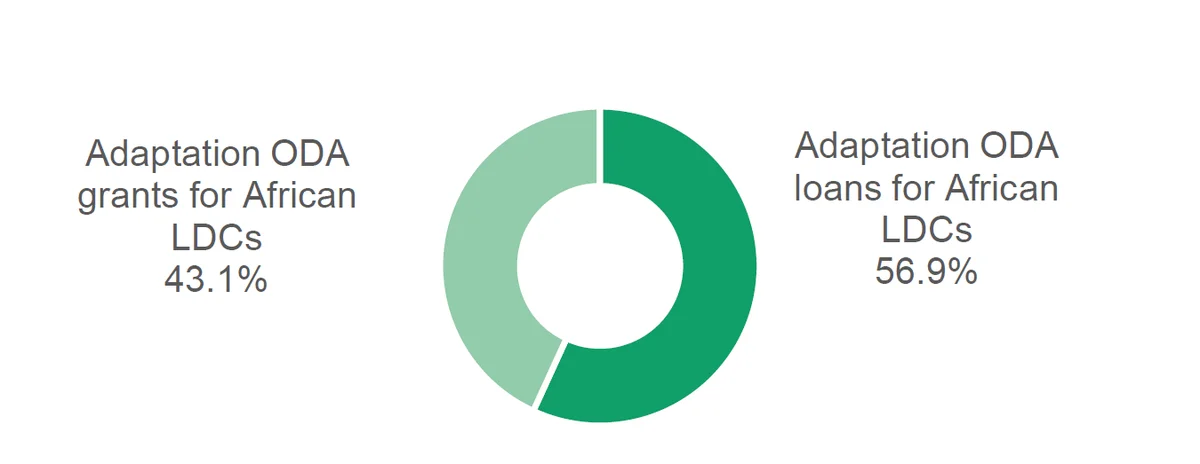
Of the US$8.33 billion of ODA for climate action in Africa, less than half (US$4.1 billion or 49.5%) is provided to LDCs, and half of that ($2.1 billion or 50.8%) comes in the form of loans. This proportion is higher when looking at adaptation finance specifically.
Figure 4: Share of ODA adaptation financing by financing instrument in African LDCs, 2022
to come
Source: Development Initiatives based on OECD DAC data.
The Sharm el-Sheikh Implementation Plan[18] encouraged multilateral banks to:
“define a new vision and commensurate operational model, channels and instruments that are fit for the purpose of adequately addressing the global climate emergency, including deploying a full suite of instruments, from grants to guarantees and non-debt instruments, taking into account debt burdens, and to address risk appetite, with a view to substantially increasing climate finance"
Sharm el-Sheikh Implementation Plan
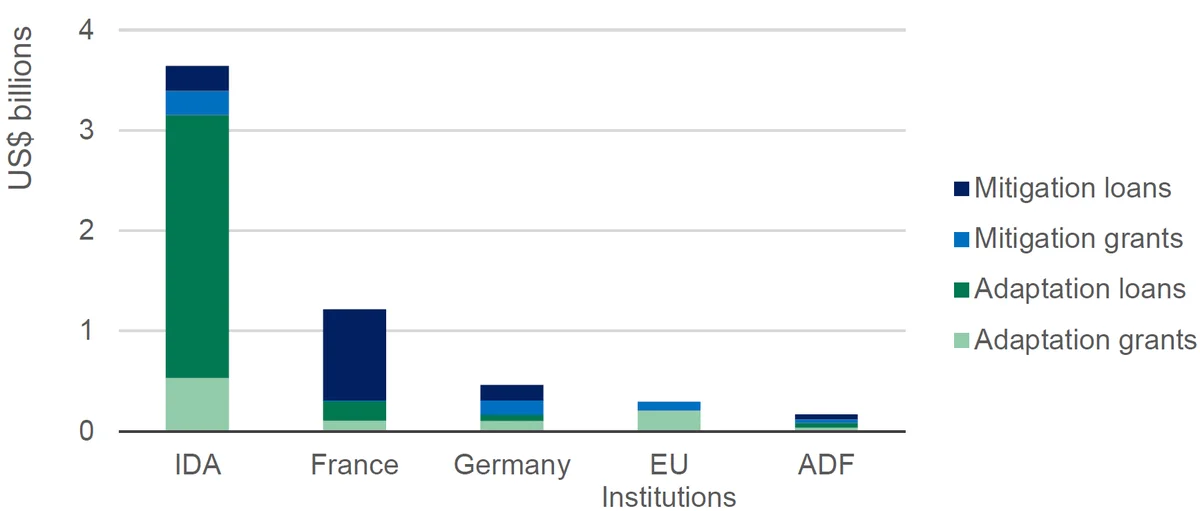
In 2022, the World Bank’s International Development Association (IDA) was the largest single provider of climate finance to African countries, providing US$4.45 billion. This total is more than half (53.4%) of that provided by all DAC providers of climate action combined.
Figure 5: Disbursements from the five largest providers of climate loans to Africa by climate action and instrument, 2022
to come
Source: Development Initiatives, based on OECD DAC data.
Notes: ADF: African Development Fund.
The IDA notes that Africa is “at the heart of its global mission to end poverty on a liveable planet, representing more than 70% of IDA’s global commitments”.[19]
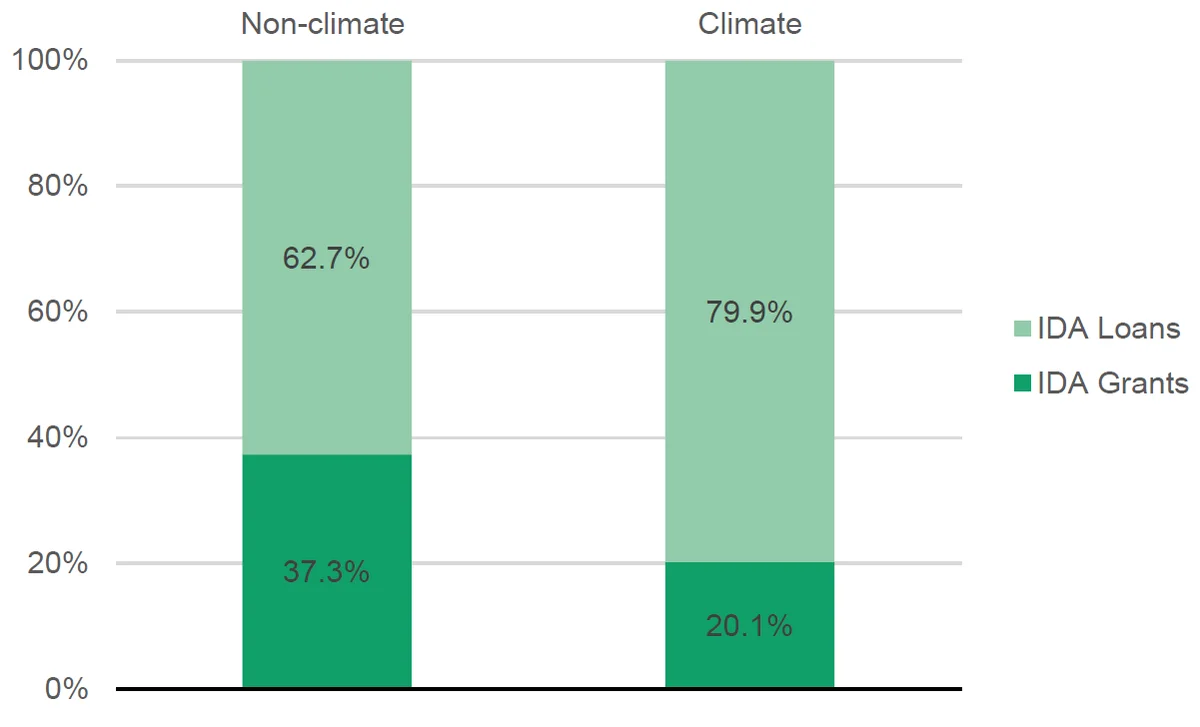
Figure 6: Share of financing instruments employed by IDA for climate and non-climate projects in Africa, 2022
to come
Source: Development Initiatives based on OECD DAC data.
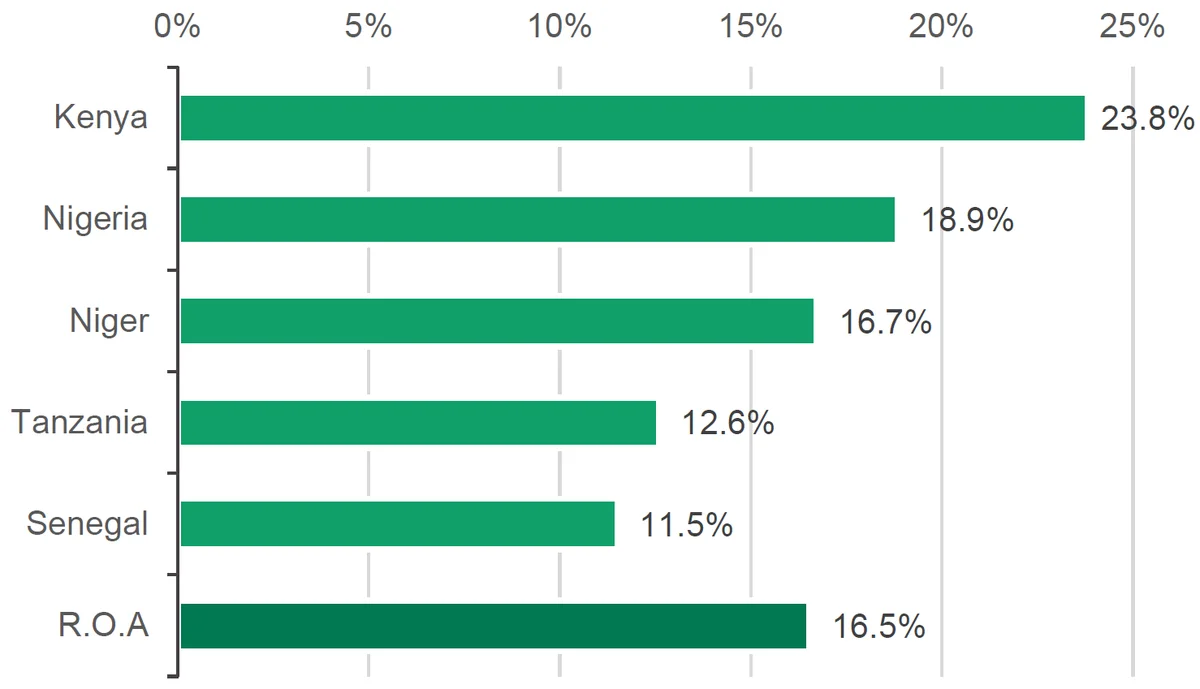
Figure 7: Five largest country recipients of IDA loans for adaptation, compared to the rest of Africa, 2022
to come
Source: Development Initiatives based on OECD DAC data.
Notes: R.O.A. = the rest of Africa
In our assessment of concessional loans for climate action in Africa, we include China since it is the continent’s largest bilateral development lender.[23]
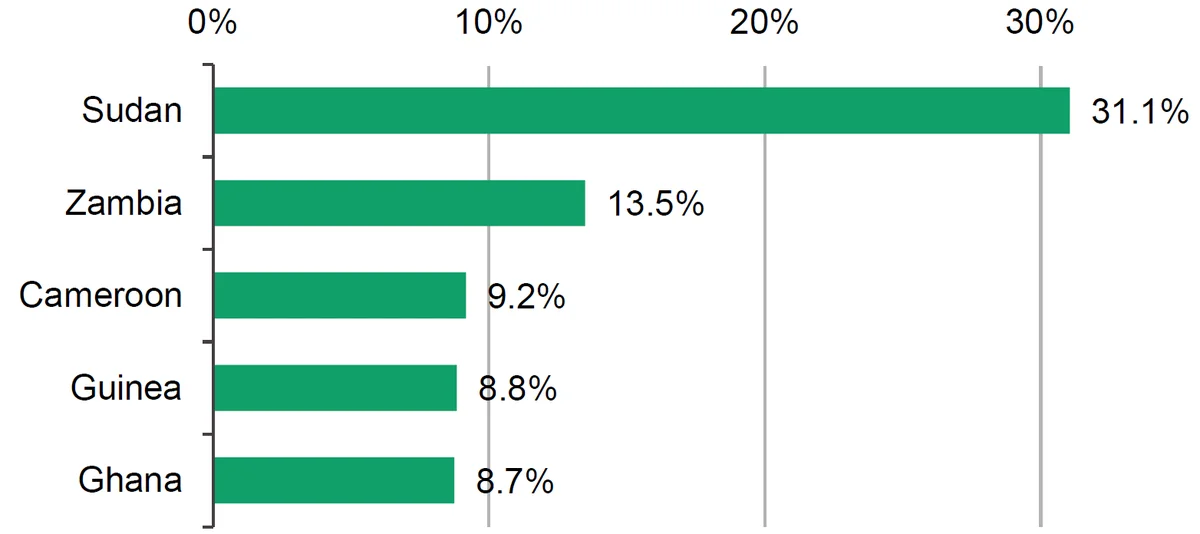
In total, Africa owed China US$5.7 billion from concessional loans in 2022. That year it provided US$275 million in concessional climate loans to Africa, making it the third-largest provider to the continent (behind only the IDA and France).[24][25]
Figure 8: The five largest African recipients of Chinese loans for climate action, 2022
to come
Source: Development Initiatives based on AidData’s Global Chinese Development Finance Dataset, Version 3.0.
Notes: Calculation excludes ‘Africa, Regional’.
Figure 9: Country average interest rates applied to climate and non-climate projects in Africa by China, 2022
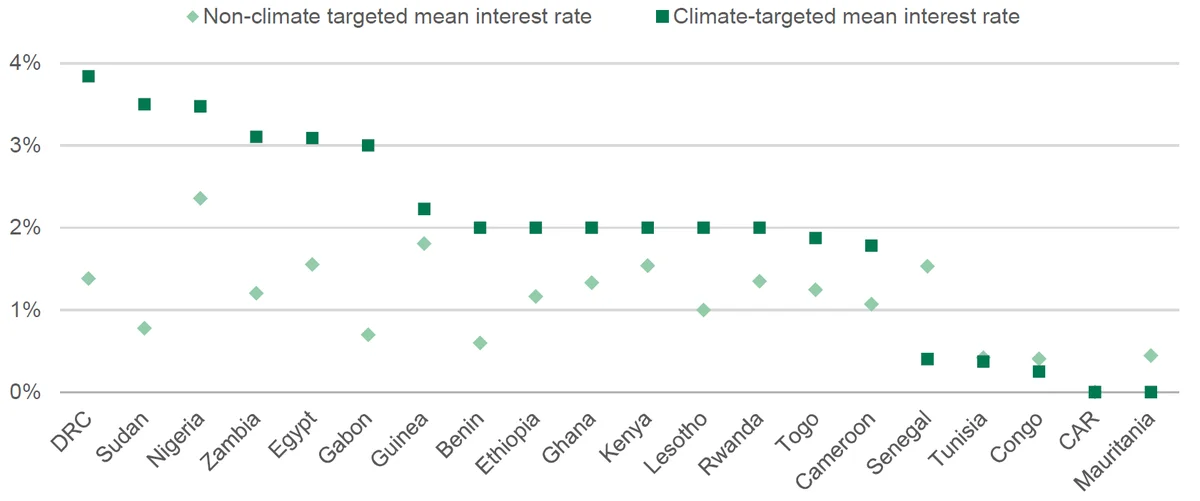
to come
Source: Development Initiatives based on AidData’s Global Chinese Development Finance Dataset, Version 3.0
Notes: Calculation excludes ‘Africa, Regional’
Public, grant-based financing should be prioritised over loans and significantly increased in line with need. Grants should be particularly prioritised for African LDCs to further their adaptation efforts and avoid burdening them further with debt for climate action, as emphasised in the LDC Group Ministerial Declaration (2023).[26]
Developed countries should consider net transfer of finances to climate action in Africa in recognition of historical responsibilities. Donors should explore the potential for raising new and additional funds for climate action[27] in accordance with the Kyoto Protocol Art 11.2.a.
While African governments continue to call for more donors to contribute to the next round of IDA’s replenishment,[28] our findings show IDA’s climate finance has an overwhelming focus on loans over grants, concentrated on a few recipient countries. While the World Bank is just that, a bank, this focus on loans is adding a debt burden to the least developed African countries.
Given that IDA supports sub-Saharan African countries that are vulnerable to climate change but have a weak ability to cope with its negative effects, its support for climate action should be primarily grant-based, in line with the needs of these countries. It should cover as many eligible countries as possible, with a focus countries that are low income and at risk of climate disaster.
The attribution of fiscal effort of climate investments funded through loans needs to be reconsidered. Climate investments that ultimately must be repaid to a lender can arguably be considered as nationally determined contributions of the loan-recipient country. Donors who provide concessional loans should have this fiscal effort recognised, but the full cost of the loan should not be recorded as the donor’s contribution to the implementation of the Convention, and this should inform how the New Collective Quantified Goal (NQCG) on climate finance is measured
The inadequate volume of climate finance, coupled with questions about instruments, additionality and impact,[29] ultimately reflect the unfair and inequitable global financial architecture.
An equitable climate financing approach requires meaningful reform of the global financial architecture – which considers what is being counted, to whom investments are attributed, and which instruments and modalities are appropriate.
This is in line with the Decision -/CP.27 Sharm el-Sheikh Implementation Plan, paragraph 37, that called on “the shareholders of multilateral development banks and international financial institutions to reform multilateral development bank practices and priorities, align and scale up funding, ensure simplified access and mobilize climate finance from various sources and encourages multilateral development banks to define a new vision and commensurate operational model, channels and instruments that are fit for the purpose of adequately addressing the global climate emergency”.[30]
Calls for changes in how climate finance is prioritised and delivered must be supported by more robust, consistent and comprehensive reporting and information on climate investments. This is the only way to measure how donor behaviour is changing, if these changes are leading to impact, and overall progress towards shared climate objectives, such as the New Collective Quantified Goal.
Donor reporting on ODA loans, for example, already requires reporting of terms and grant equivalent (including, for example, interest rates, payment structures and dates); however, climate finance reported under the Enhanced Transparency Framework[31] currently seeks only voluntary information on grant equivalent and no details of full terms on even a voluntary basis.[32]
Greater consistency in reporting based on agreed standards is needed in order to monitor how much new and additional climate financing developed countries are transferring to Africa and developing countries elsewhere.[33][34]
Before data for this analysis was downloaded from the OECD and AidData websites respectively, a model to determine a project’s relevance to climate, climate adaptation and/or climate mitigation was developed. A natural-language processing approach was taken to classify project title and description text into relevant categories. First, the ‘bert-base-multilingual-uncased’ model was selected based on the model’s performance on the languages commonly contained within the OECD DAC’s Creditor Reporting System (CRS). An additional 1% of unique vocabulary from the CRS was added to the model before fine-tuning. This gave the model a better understanding of the technical language contained within development and humanitarian projects and made training classifier networks built on top of the model embeddings more efficient. Lastly, the model was fine-tuned for three full passes of all titles and descriptions contained within the CRS.
Once the fine-tuned base model was fully trained, training data was collected by taking project titles, descriptions, and metadata on each project’s climate relevance from the International Aid Transparency Initiative (IATI) data standard. IATI was chosen as the source for the training data both to avoid overfitting the exact text found within the CRS and because the IATI data contained a greater quantity of text. For projects where analogues could be found between the CRS and IATI, the combined CRS title, short description and long description fields had an average length of 470 characters, while the average length of IATI text was 1,068 characters. This data was used to train one binary classification model and one multi-class classification model. The binary model focused on identifying principal climate relatedness (either adaptation or mitigation as a principal objective) and achieved an accuracy of 91%. The multi-class model was tasked with differentiating climate adaptation from climate mitigation, as well as classifying projects as either significant or principal objectives. The multi-class model achieved an accuracy rate of 85%.
For AidData’s Global Chinese Development Finance (GCDF) dataset, candidate projects were first identified by their dates. A project was selected for evaluation if it contained a start date (planned or actual) during or prior to 2022 and an end date (planned, actual or loan repayment) during or after 2022. The binary classification model was chosen to evaluate the GCDF because the text was derived from media reports and differed in tone and content from the language typically used in project titles and descriptions. Model inference was run on the text in the GCDF to rank projects from most likely to be climate-related to least likely. A keyword search was then applied to manually review the results of the inference. The text was checked for the words and word fragments “solar”, “hydro”, “bio”, “ecolog” and “climate”, to determine whether to classify the project positively or negatively. Subjectively, the binary climate classifier did a good job with ranking the projects and matched up with the keyword search. One notable example of a project that had to be manually marked as negative despite a positive classification was a case in which the project described environmentalist opposition to the construction. We theorise this description yielded a false positive result because criticism of a project was not a feature commonly observed in the training data of the model.
OECD CRS data was first filtered by projects that were classified as ODA, occurred in the year 2022 and had an African Union country or ‘Africa, regional’ as a recipient. Projects that were already screened by their donors for the Rio markers were kept as is. The multi-class classifier was applied to unscreened projects to determine the significant/principal climate adaptation/mitigation status of each project. A keyword search was also performed on the unscreened CRS data but given the wide diversity of donors a manually curated list of keywords was insufficient. Instead, the keywords were derived from the data itself according to term-frequency inverse-document-frequency for the projects that already had Rio markers. A total of 322 keywords were identified through this process. A project was considered a positive match if the model predicted a principal climate objective and one or more of the keywords was a match. A project was considered as “both” adaptation and mitigation only if both were identified as principal objectives.
African Group of Negotiators
This negotiating group represents the common positions of Africa, as a bloc, during multilateral negotiations on climate change.
Climate finance
This refers to “local, national or transnational financing – drawn from public, private and alternative sources of financing – that seeks to support mitigation and adaptation actions that will address climate change.”[35]
Enhanced Transparency Framework
This is a reporting framework introduced by the Paris Agreement that requires Parties to submit ‘Biennial Transparency Reports’ from 2024. For more information, see the UNFCCC’s ‘Reference Manual for the Enhanced Transparency Framework’, available at https://unfccc.int/documents/268136
Nationally determined contributions
These are national reports outlining commitments to reduce greenhouse gas emissions, and in some cases required financing.
New Collective Quantified Goal (NQCG)
This is a new goal on climate finance, set from a floor of US$100 billion, to be agreed prior to 2025 by the Conference of the Parties serving as the meeting of the parties to the Paris Agreement.
Rio markers
An OECD system that uses a three-point scale to identify climate focus. This system was originally intended to be qualitative but has since been adapted by many countries to form the basis of UNFCCC reporting.
Martha Bekele led on the writing of this factsheet, while Alex Miller led on the data and machine learning. Thanks are due to Duncan Knox, who supported as the data advisor.
This briefing examines the gendered impacts of climate change on women and girls, using Rwanda as a case study. It analyses the reporting, availability and tracking of gender-relevant climate finance, and the barriers that hinder women's rights organisations' access to finance.
DI presented at this event which aimed to highlight the critical role of gender data in shaping climate policies, with a focus on the Gender Action Plan and the impact it can have at regional, national and local levels.
Join leading experts as they explore problems with current climate finance reporting, transparency and accountability. What should count towards a New Collective Quantified Goal on Climate Finance, and who should decide?